
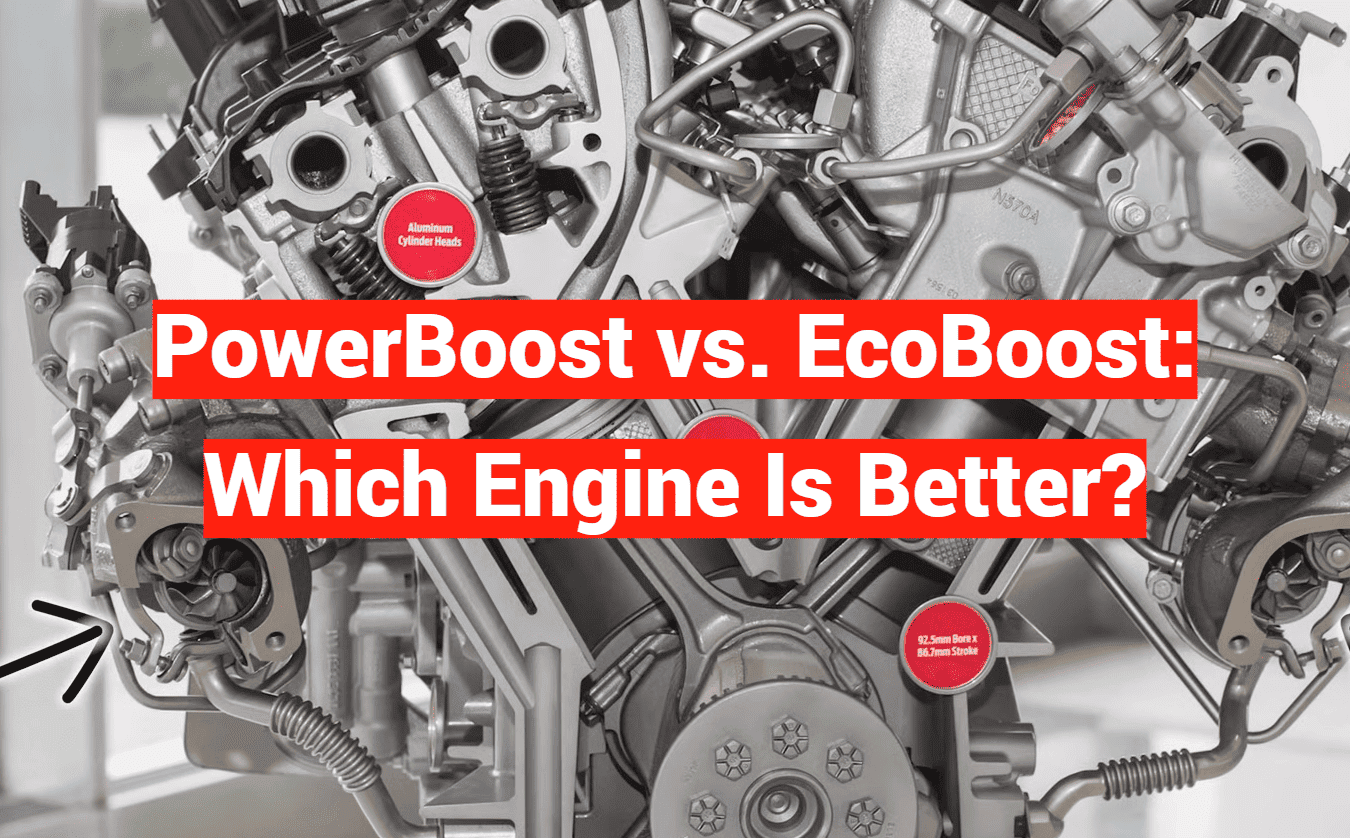
Did you know that choosing the right powertrain can affect your annual fuel costs by hundreds of dollars? This single decision has a major impact on your driving experience and wallet.
If you’re looking at a new Ford F-150 or another Ford vehicle, you face a big choice. You must pick between two advanced engine families. This isn’t just about names; it’s about how your truck will perform every day.
We will break down these technologies in a simple way. You will learn about real-world performance, towing power, and fuel efficiency. Our goal is to make this technical topic easy for everyone to understand.
Whether you need a tough workhorse or an efficient daily driver, the right powertrain matters. We will explore specific variants and their capabilities. This guide will help you make a confident and informed decision for your needs.
Key Takeaways
- The choice between these two engine technologies significantly impacts fuel costs and daily performance.
- This comparison is essential for anyone considering a new Ford F-150 or similar vehicle.
- Understanding the real-world differences helps maximize your investment in a new truck.
- Each powertrain option offers unique benefits tailored to different driving needs and lifestyles.
- The article will provide a clear breakdown of performance metrics, including towing and fuel economy.
- Technical information will be presented in an accessible, easy-to-understand manner.
- You will learn about specific engine variants and their practical applications.
Understanding the Technologies Behind PowerBoost and EcoBoost
At the heart of Ford’s advanced engine lineup are two distinct technological approaches that deliver impressive results in different ways. Both represent significant engineering achievements, but they operate on fundamentally different principles.

EcoBoost: Efficiency Meets Power
The EcoBoost system combines turbocharging with direct fuel injection. This technology forces more air into the combustion chamber, allowing smaller engines to produce power levels typically seen in larger engines.
This approach delivers excellent fuel economy without sacrificing performance. The ecoboost engine is perfect for drivers who want spirited acceleration while keeping fuel costs manageable.
Ford has successfully implemented this powertrain across their entire vehicle lineup. From Mustangs to F-150 trucks, the technology demonstrates remarkable versatility.
PowerBoost: Integrating Hybrid Innovation
The PowerBoost system builds upon the EcoBoost foundation by adding hybrid technology. It combines a gasoline engine with an electric motor and battery pack.
This creates a full hybrid powertrain that delivers exceptional capability. Drivers get enhanced power for demanding tasks while achieving better fuel economy.
The integration of electric assistance provides immediate torque response. This system truly offers the best of both worlds: strong performance and impressive efficiency.
| Feature | EcoBoost Technology | PowerBoost Technology |
|---|---|---|
| Core Technology | Turbocharging + Direct Injection | Hybrid System + Turbocharged Engine |
| Fuel Efficiency | Excellent for gasoline engines | Superior hybrid economy |
| Power Delivery | Strong turbocharged performance | Instant electric torque + engine power |
| Additional Features | Standard engine capabilities | Pro Power Onboard generator system |
| Vehicle Availability | Across Ford’s entire lineup | 2021+ F-150 models exclusively |
Exploring Engine Options and Performance Metrics
The real-world performance differences between Ford’s engine families become clear when examining individual specifications and capabilities. Each option serves distinct driving needs with unique power characteristics.
Popular EcoBoost Engine Variants
Ford’s 2.3L EcoBoost delivers impressive 350 lb-ft of torque despite its compact size. This four-cylinder appears across Ford’s diverse vehicle lineup, from Broncos to Mustangs.
The 2.7L EcoBoost engine produces 325 horsepower and 400 lb-ft of torque. It handles light towing up to 8,400 pounds while maintaining excellent fuel efficiency for daily driving.
For maximum capability, the 3.5L EcoBoost generates up to 510 lb-ft of torque and 450 horsepower. This engine tows heavy loads up to 13,500 pounds in Ford F-150 applications.
Key Features of the 3.5L PowerBoost Hybrid
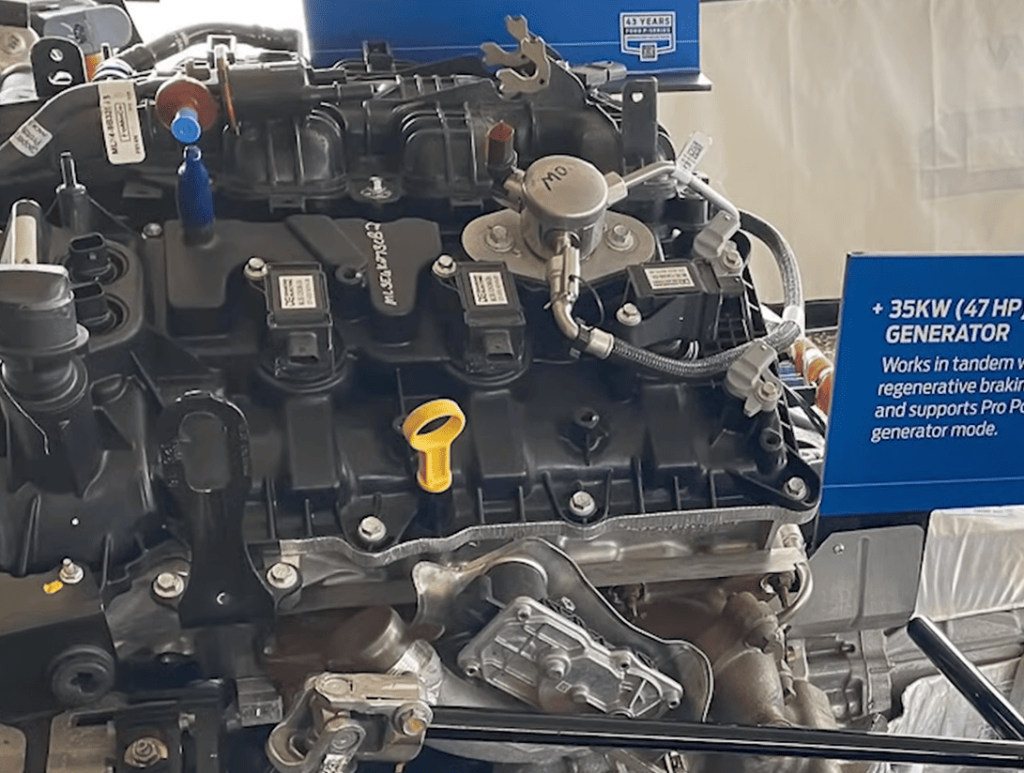
The PowerBoost engine combines hybrid technology with a proven V-6 design. It delivers 430 horsepower and massive 570 lb-ft of torque.
This advanced powerboost engine handles 11,200 pounds of towing capacity while offering hybrid efficiency. It’s exclusively available on newer Ford F-150 models.
Ford also offers the all-electric F-150 Lightning for drivers ready to transition fully to electric power. Each engine option provides distinct advantages for different driving scenarios.
A Closer Look at powerboost vs ecoboost in Real-World Applications
The true test of any truck engine comes down to two critical factors: how much it can pull and how efficiently it runs. Let’s see how these powertrains handle everyday tasks and special projects.
Towing Capacity and Fuel Economy
The 2.7L EcoBoost offers a solid 8,400 lbs of towing capacity. It provides the best fuel economy among traditional gas engine options. This makes it a great fit for weekend trips with a small camper.
For heavier loads, the 3.5L EcoBoost jumps to an impressive 13,500 lbs capacity. It’s the top choice for contractors who regularly towing large equipment.
The 3.5L PowerBoost hybrid strikes a brilliant balance. It delivers 11,200 lbs of towing muscle while achieving an EPA-estimated 23 combined MPG. This means significant savings at the pump over time.
Its hybrid powertrain really shines in city driving. The electric motor assists with acceleration, boosting efficiency in stop-and-go traffic.
Engine Power, Torque, and Performance
When it comes to raw power, each engine serves a different purpose. The 2.7L provides 325 horsepower, which is plenty for daily driving.
The 3.5L EcoBoost can deliver up to 450 horsepower for serious performance. But the PowerBoost engine stands out with its massive 570 lb-ft of torque.
This high torque means easier acceleration with a heavy trailer. It provides confident power on steep grades.
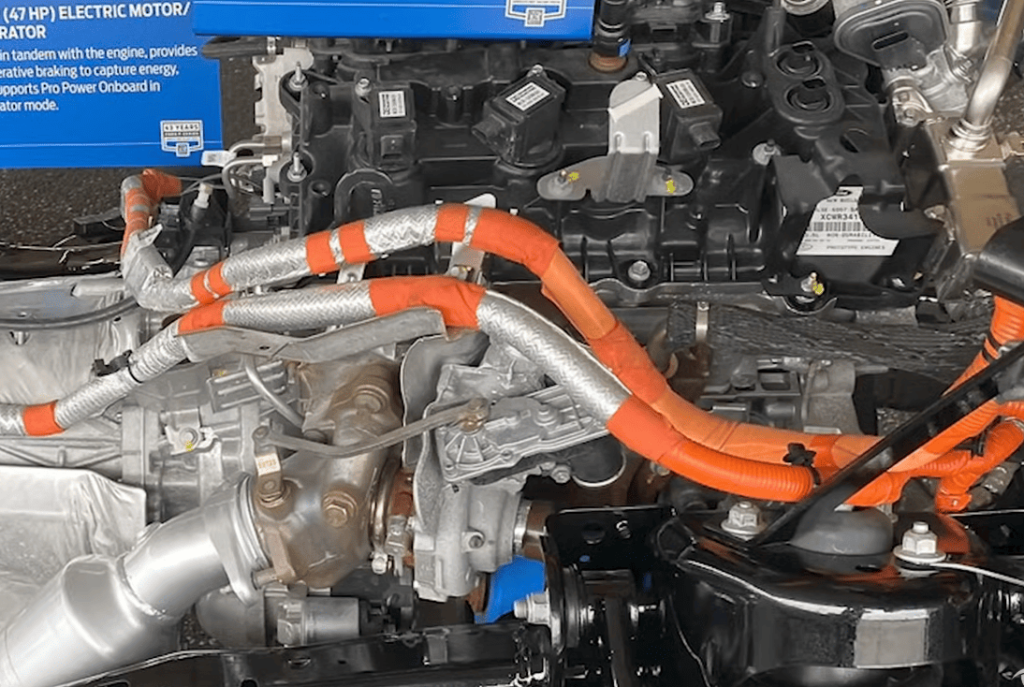
A key advantage of the PowerBoost hybrid is the Pro Power Onboard generator.
- Standard 2.4 kW system: Powers tools, camping gear, and tailgating equipment.
- Optional 7.2 kW upgrade: Can run powerful appliances or even provide emergency home backup.
This system adds incredible versatility for work and play, making the Ford F-150 a mobile power source.
Conclusion
Your ideal truck engine choice ultimately comes down to how you plan to use your vehicle on a daily basis. Both technologies offer exceptional performance for different driving scenarios.
The traditional gas engines provide excellent balance for everyday drivers. They deliver spirited performance with commendable fuel economy. This makes them perfect for commuting and light recreational use.
The hybrid system represents the premium choice for maximum capability. It offers incredible torque for heavy towing and unique features like the onboard generator. This technology justifies its cost through long-term savings and utility.
We recommend visiting your local Ford dealership to test drive different models today. Experiencing each powertrain firsthand will help you make the right decision for your needs.
Whether you choose the efficient gas option or advanced hybrid system, you’re getting a capable American pickup. The Ford F-150 continues to deliver proven reliability and performance for all types of drivers.