
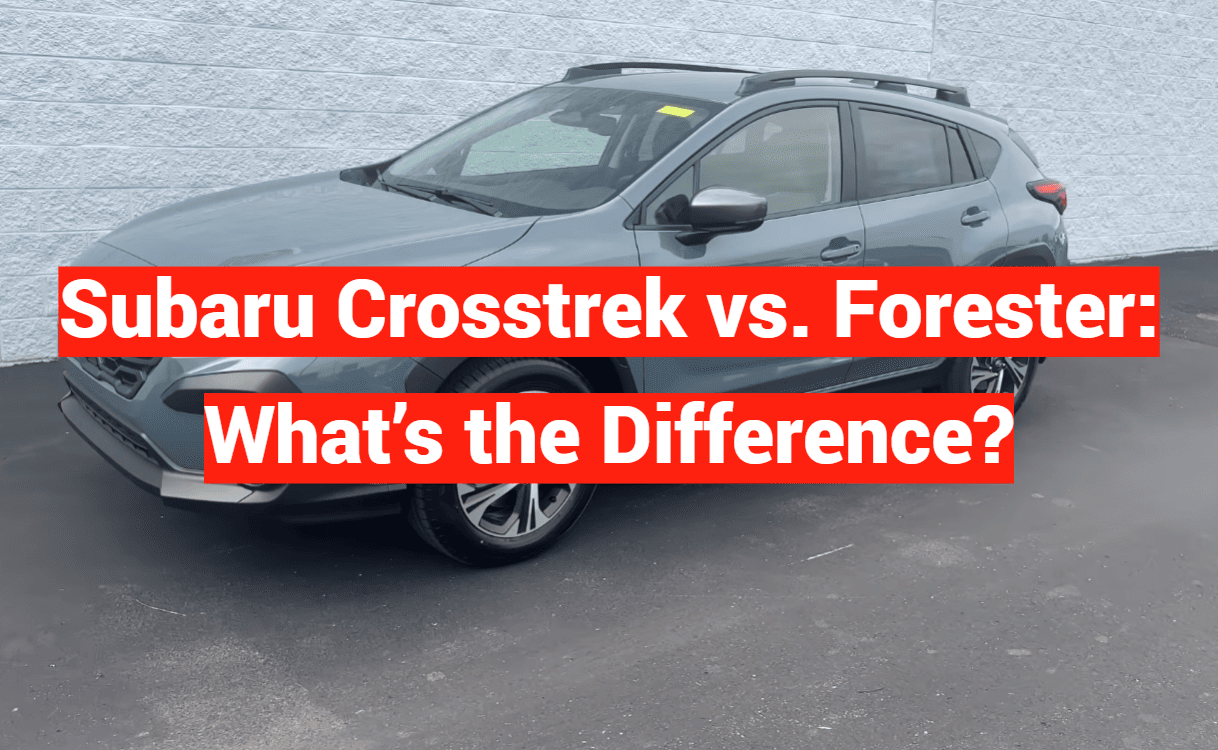
Did you know that over 40% of new car buyers in the compact SUV segment consider more than one model from the same brand? This highlights a common dilemma for shoppers seeking the perfect blend of practicality and adventure.
Choosing between two popular vehicles from a trusted manufacturer can be tough. Both models offer legendary reliability and standard all-wheel drive. They are built for drivers with active lifestyles.
This guide is here to help. We will break down the key differences to make your decision easier. You will see how size, interior space, and performance set these SUVs apart.
One option is more compact and fuel-efficient, perfect for city life and weekend getaways. The other provides maximum cargo room and a commanding view of the road, ideal for families.
Understanding these distinctions ensures you pick the vehicle that truly fits your daily needs and future adventures.
Key Takeaways
- Both vehicles offer Subaru’s renowned safety and all-wheel drive capability.
- Size and interior space are the most significant differentiators.
- One model prioritizes urban agility and fuel economy.
- The other focuses on passenger comfort and cargo capacity.
- Engine performance and pricing vary to suit different budgets.
- Your choice should align with your primary passenger and cargo needs.
Design and Dimensions Comparison
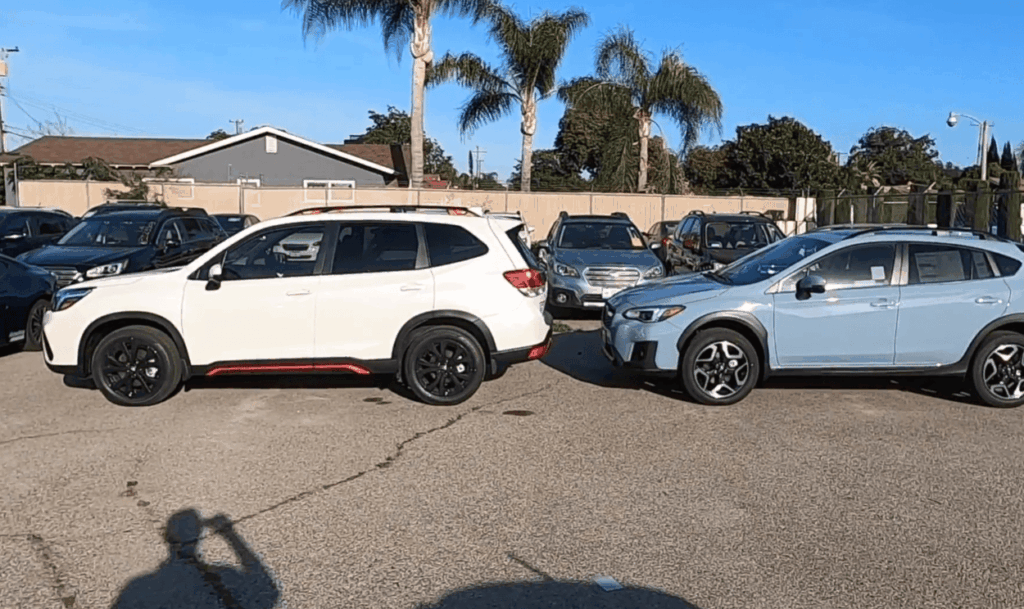
The most noticeable difference between these vehicles becomes apparent the moment you stand beside them. One offers a compact, agile profile perfect for urban environments, while the other presents a more substantial presence suited for family adventures.
Exterior Measurements and Ground Clearance
The 2025 Subaru Crosstrek measures 176.4 inches long with a height of 63.6 inches. This creates a lower, more car-like profile that’s easier to park in tight spaces.
In contrast, the 2025 Subaru Forester stretches 6.9 inches longer at 183.3 inches and stands taller at 68.9 inches. This extra height provides a commanding view of the road ahead.
Both compact SUVs share similar wheelbases and offer impressive 8.7 inches of ground clearance. Wilderness trims push this even higher for serious off-road capability.
Interior Space and Cargo Capacity
Inside, the differences become even more pronounced. The Forester provides 110.8 cubic feet of passenger volume compared to the Crosstrek’s 100.5 cubic feet.
Rear-seat passengers will appreciate the extra legroom in the larger model. This makes longer trips more comfortable for everyone onboard.
Cargo space is where the Forester truly excels. With rear seats folded, it offers 74.4 cubic feet versus 54.9 cubic feet in the Crosstrek. That’s nearly 20 cubic feet more for gear and luggage.
subaru crosstrek vs forester: Key Engine and Performance Specs
When it comes to getting where you want to go, the heart of any vehicle lies in its powertrain. The choices here reveal how each model prioritizes different driving experiences.
Engine Options and Horsepower Comparison
The 2025 Subaru Crosstrek offers flexibility with two distinct engine choices. Drivers can select between a fuel-efficient base option or upgrade to enhanced performance.
In contrast, the 2025 Subaru Forester provides a single, well-balanced powerplant across most trims. This simplifies the decision-making process while delivering consistent capability.
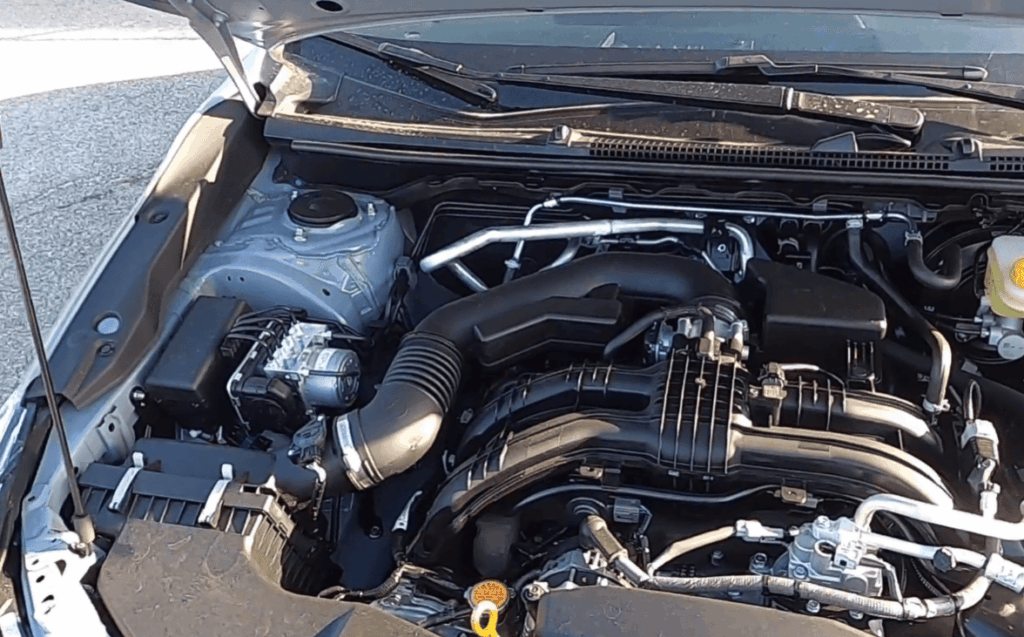
Both utilize the unique Subaru BOXER engine design. This horizontal layout creates a lower center of gravity for improved stability and cornering performance.
Towing Capacity and Driving Dynamics
Towing capabilities show significant variation between standard and adventure-ready trims. Base models handle light loads perfectly for weekend adventures.
Wilderness editions dramatically increase this capacity for serious hauling needs. The smaller vehicle surprisingly outperforms its larger counterpart in maximum towing rating.
Every model features standard Symmetrical All-Wheel Drive for confident traction. The smooth Lineartronic CVT transmission provides seamless acceleration without traditional gear shifts.
Fuel Efficiency and Driving Range
Modern SUV shoppers increasingly prioritize miles per gallon alongside capability and comfort features. Both 2025 models deliver impressive efficiency while maintaining their adventure-ready character.
City and Highway MPG Analysis
The 2025 Subaru Crosstrek demonstrates excellent fuel economy across its trim lineup. Base and Premium versions achieve an impressive 34 MPG on the highway and 27 MPG in city driving.
Meanwhile, the 2025 Subaru Forester maintains competitive numbers at 33 MPG highway and 26 MPG city. This minimal one-MPG difference translates to nearly identical real-world fuel costs for most drivers.
Both vehicles share the same 16.6-gallon fuel tank capacity. This consistency means driving range variations come entirely from efficiency differences rather than tank size.
The Crosstrek’s slight advantage provides approximately 20 extra miles per tank. This extended range proves beneficial for reducing stops during long road trips.
Wilderness editions sacrifice some fuel efficiency for enhanced off-road capability. Even these adventure-focused trims maintain respectable economy ratings for their class.
Interior Comfort, Seating, and Versatility
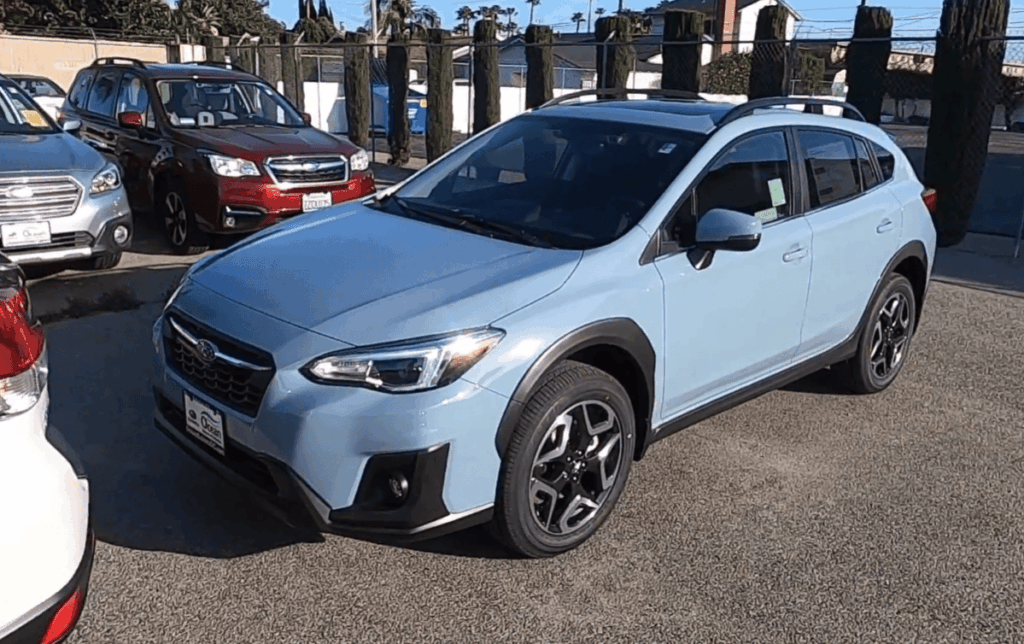
Stepping inside reveals where these two vehicles truly diverge in their approach to comfort and daily usability. While both accommodate five passengers comfortably, the experience differs significantly based on your priorities.
Passenger Volume and Seating Configurations
Both models offer versatile seating arrangements with premium upholstery options. You can choose from cloth, leather, or durable StarTex water-repellent materials. The smaller model adds personality with sport cloth featuring vibrant contrast stitching.
Comfort features extend beyond basic seating. Available heated front seats and a heated steering wheel provide warmth during cold months. The larger SUV goes further with ventilated front seats for summer comfort and heated rear seat sections.
“The right seating configuration can transform a daily commute into a comfortable journey, making interior choices as important as performance specs.”
Driver comfort receives special attention with ten-way power-adjustable seats. However, the front passenger experience varies. One offers eight-way power adjustment while the other has manual controls.
| Feature | Compact SUV | Family SUV |
|---|---|---|
| Rear Seat Legroom | 36.5 inches | 39.4 inches |
| Cargo Space (seats up) | 19.9 cu ft | 29.6 cu ft |
| Seat Folding Mechanism | Manual release | One-touch fold |
| Available Rear Seat Heat | No | Yes |
The 60/40-split folding rear seats maximize cargo flexibility in both vehicles. But the ease of operation differs substantially. One model’s simple mechanism proves handy when your hands are full.
Cargo capacity behind the second row shows the clearest practical difference. The family-oriented model offers nearly 10 cubic feet more space. This means groceries or luggage fit without folding seats down.
Safety and Driver Assistance Features
Peace of mind is paramount when choosing your next vehicle. Both the 2025 Subaru Crosstrek and 2025 Subaru Forester are engineered with this principle at their core. They share a commitment to protecting you and your passengers on every journey.
This commitment starts with a strong foundation and extends to intelligent technology that acts as a vigilant co-pilot.
Standard Safety Engineering and Structural Integrity
Both models are built on the robust Subaru Global Platform. This architecture uses high-strength steel for exceptional rigidity and crash protection.
This solid base provides a safe and stable feel on the road. It forms the first layer of a comprehensive safety system.
Advanced Adaptive Cruise Control and EyeSight Technology
Every trim comes with standard EyeSight Driver Assist Technology. This suite of features is like an extra set of eyes on the road.
The advanced adaptive cruise control is a standout feature. It maintains your speed and a safe distance from the car ahead. It can even provide gentle steering assist to help keep you centered in your lane.
This driver assist technology manages braking and throttle seamlessly. It reduces fatigue during long trips and stressful traffic.
The Forester Touring trim adds an exclusive distraction mitigation system. It uses facial recognition to monitor driver alertness. It provides warnings if you become distracted or drowsy.
Both vehicles also share these essential driver assist features:
- Blind spot detection with rear cross-traffic alert
- Lane departure and lane keep assist
- Reverse automatic braking
This layered approach to safety ensures confidence behind the wheel.
Infotainment and Technology Integration
From touchscreen displays to smartphone integration, the technology features in these SUVs transform every drive into a connected experience. Both models offer sophisticated system designs that keep you entertained and informed throughout your journey.
Multimedia Touchscreen Options
The 2025 Subaru lineup provides varied screen options to suit different preferences. Base trims feature dual 7-inch displays that show multiple information sources simultaneously.
Higher trims upgrade to an impressive 11.6-inch touchscreen. This large display makes navigation and climate controls easily accessible while driving. The interface is intuitive and responsive.
Smart Connectivity: Apple CarPlay and Android Auto
Wireless Android Auto and Apple CarPlay come standard across both vehicle lineups. This allows seamless smartphone connectivity without cables. Your phone automatically connects for music, calls, and messaging.

The navigation system options differ between models. Some trims include built-in navigation, while others rely on smartphone integration. Additional connectivity features include multiple USB ports and 4G LTE Wi-Fi capability.
| Technology Feature | Compact SUV | Family SUV |
|---|---|---|
| Standard Screen Size | Dual 7-inch | Dual 7-inch |
| Premium Screen Size | 11.6-inch | 11.6-inch (8-inch on Wilderness) |
| Wireless Android Auto | Standard | Standard |
| Built-in Navigation | Limited trim upgrade | Touring standard, Limited optional |
| Premium Audio | 10-speaker Harman Kardon | 9-speaker Harman Kardon |
Exterior Color Options and Trim Levels
Your vehicle’s exterior color and trim level make the first impression, reflecting your personal style before you even turn the key. The 2025 lineup offers distinctive palettes that let you express your personality through twelve vibrant options for one model and eleven sophisticated hues for the other.
Available Colors and Paint Upgrades
Eye-catching choices include Alpine Green, Daybreak Blue Pearl, and Lithium Red Pearl. Several premium colors require a $395 upgrade for those wanting something beyond the standard palette.
The other model features earthy, mature tones like Autumn Green Metallic and Brilliant Bronze Metallic. Both offer exclusive Geyser Blue only on their Wilderness trims, creating a distinctive adventure-ready identity.
Trim Differentiation: Premium, Limited, Wilderness, and Touring
Trim level structures differ significantly between these SUVs. One lineup includes Base, Premium, Limited, and Wilderness configurations. The other adds a luxurious Touring trim at the top range.
Base premium trims provide excellent value with standard all-wheel drive and modern safety features. They appeal to budget-conscious buyers who don’t want to sacrifice essential features.
| Feature | Base Trim | Premium Trim | Limited Trim | Wilderness Trim |
|---|---|---|---|---|
| Standard Colors | 6 options | 8 options | 10 options | Exclusive colors |
| Premium Paint | Not available | $395 upgrade | Included | Wilderness exclusive |
| Key Features | Essential safety | Heated seats | Premium audio | Off-road upgrades |
| Target Buyer | Value-focused | Comfort seekers | Tech enthusiasts | Adventure ready |
The Wilderness trim represents the most capable off-road configuration with enhanced ground clearance and unique styling. The Touring trim offers premium leather upholstery and advanced technology for buyers prioritizing maximum comfort.
Adaptive Cruise Control and Advanced Assistant Systems
Today’s advanced driver assistance technologies transform highway driving from a chore into a relaxing experience. These systems work together to create a safer, more comfortable journey.
The adaptive cruise control system maintains your preset speed while monitoring traffic ahead. It automatically adjusts velocity to keep safe distances without constant driver input.
Lane centering technology provides gentle steering assistance to keep your vehicle properly positioned. This reduces the small corrections that cause fatigue during long drives.
Both vehicles feature standard X-MODE that optimizes traction on slippery surfaces. This advanced system works with all-wheel drive for confident handling in challenging conditions.
| Driving Scenario | Technology Feature | Benefit |
|---|---|---|
| Highway Driving | Adaptive Cruise Control | Reduces driver fatigue |
| Lane Maintenance | Lane Centering | Improves safety and comfort |
| Off-Road Conditions | X-MODE with Hill Descent | Enhances traction and control |
| Steep Descents | Hill Descent Control | Prevents dangerous acceleration |
Select trims offer dual-function X-MODE with settings for specific terrains like deep snow or mud. The Lineartronic CVT transmission adapts to your driving style for optimal performance.
These advanced control systems work together to create a semi-autonomous driving experience. Drivers must remain attentive while enjoying reduced workload on long journeys.
subaru crosstrek vs forester: Which Model Suits Your Lifestyle?
Your ideal vehicle choice extends beyond simple specs to how it fits your daily life. The decision between these two capable SUVs ultimately hinges on your specific needs and routines.
Understanding their distinct personalities is key to finding your perfect match.
Assessing Daily Commutes vs. Off-Road Adventures
City dwellers and solo commuters often favor one model for its compact size. Its nimble nature makes parking effortless and navigating tight traffic a breeze.
This option also provides a slight edge in fuel economy. This translates to real savings for drivers with long daily commutes.
Families or those who frequently carpool will appreciate the other model’s spacious interior. It offers significantly more rear legroom and cargo capacity for passengers and gear.
The higher seating position provides a commanding view of the road. Many drivers prefer this for added confidence during highway travel.
For weekend adventurers, both vehicles are excellent choices. They share robust capability thanks to standard symmetrical all-wheel drive and generous ground clearance.
One model’s Wilderness trim, however, boasts a superior towing capacity. This is ideal for hauling camping trailers or outdoor equipment.
| Driver Profile | Recommended Model | Primary Advantage |
|---|---|---|
| Urban Commuter | Compact SUV | Maneuverability & Fuel Economy |
| Growing Family | Spacious SUV | Passenger & Cargo Space |
| Weekend Adventurer | Wilderness Trim | Enhanced Towing & Off-Road Features |
| Enthusiastic Driver | Compact SUV | Responsive Handling & Lower Stance |
The best way to decide is to experience both SUVs firsthand. A back-to-back test drive will reveal which vehicle’s character truly aligns with your lifestyle.
Pricing, Warranty, and Overall Value
The financial commitment of vehicle ownership involves careful consideration of both initial investment and long-term protection. Understanding how pricing aligns with warranty coverage helps determine true value.
Budget-conscious buyers will appreciate the accessible starting price of one model at $27,980. The larger alternative begins at $31,445, reflecting its enhanced cargo capacity and additional features.
MSRP and Trims Value Comparison
This price difference represents more than just numbers. It reflects the distinct capabilities and target audiences of each vehicle. The higher-priced model offers greater passenger space and premium amenities.
Both vehicles include identical warranty protection as standard equipment. A three-year/36,000-mile bumper-to-bumper warranty covers virtually all components. The five-year/60,000-mile powertrain warranty protects the engine, transmission, and all-wheel drive system.
Extended warranty options through the Subaru Added Security Program provide customizable coverage. The Classic Plan focuses on major components while the Gold Plus Plan offers comprehensive protection for long-term owners.
Value assessment extends beyond the initial purchase price. Consider which standard features come with each trim level and how warranty coverage aligns with your ownership plans.
Conclusion
With all the technical comparisons complete, the final decision rests on how you plan to use your vehicle day-to-day.
The 2025 Subaru Crosstrek shines for urban drivers seeking excellent fuel economy and easy parking. Its compact size makes city navigation simple while still offering adventure capability.
For families or those needing maximum space, the Subaru Forester delivers with generous passenger volume and impressive cargo space. The additional cubic feet make it ideal for road trips and hauling gear.
Both SUVs feature reliable engine performance and comprehensive safety features. Your choice ultimately comes down to whether you prioritize maneuverability or spacious rear accommodations.
The best approach is to test drive both models. Experience their unique personalities firsthand to discover which vehicle truly fits your lifestyle and adventures ahead.